God is a Capitalist

Showing posts with label Federal Reserve. Show all posts

Wednesday, August 26, 2020

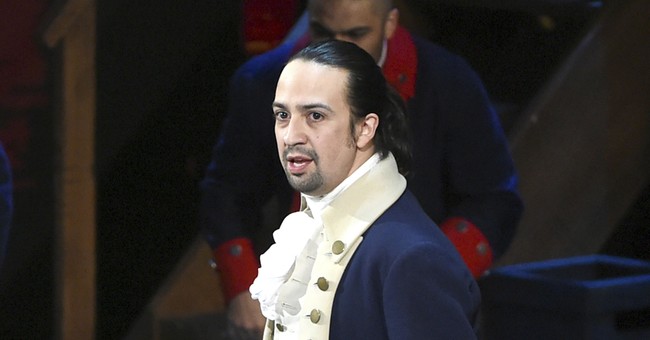
Hey, Disney, Hamilton Betrayed His Wife And His Country


Source: Photo by Evan Agostini/Invision/AP

Lin-Manuel Miranda’s wildly successful Broadway musical Hamilton would embark on its fourth tour this fall had the virus not canceled it. Instead, a video version will begin airing on Disney+. It helps to appreciate the magnitude of Miranda's accomplishment to know that T. S. Eliot, often called the greatest Christian poet of the 20th century, met moderate success at infusing theater with verse. Eliot considered Shakespeare to be the greatest poet in English because he integrated the two so well.

The hero, Alexander Hamilton was a signer of the Constitution and was a founding father with faults. He cheated on his wife who forgave him, as Miranda points out. And he betrayed his country with his founding of a national bank. Hamilton was well-read, so he had to know that the Bank of England was founded and given a monopoly on currency in exchange for financing war against France. Before governments could borrow unlimited amounts from banks, they had to tax the people to pay for soldiers and weapons, so wars were much shorter.

And Hamilton had to know about the South Sea Bubble in England and the Mississippi Bubble in Paris. In both cases, the banks established by the governments of England and France issued tsunamis of new currency that resulted in rocketing prices in stock markets, housing, carriages, and horses. Both bubbles burst in 1720, leaving the two countries much poorer. Richard Cantillon made his fortune in the Paris mania by short selling stocks and insisting on payment in gold rather than the worthless paper money. Cantillon explained the failings of the Paris bank in his Essai Sur La Nature Du Commerce En Général, published in French in 1755. Hamilton may not have read Cantillon, but he quoted from Postalthwayte's Universal Dictionary, which reprinted much of Cantillon's book.

Wednesday, June 12, 2019

When The Fed Creates Money, Who Gets It?


Source: AP Photo/Jacquelyn Martin

The stock market rocketed recently on news that the Federal Reserve may cut interest rates. People speculated that it may do so because of tanking economies in the rest of the world, President Trump’s trade wars, the slowing US economy, and other ideas.

Central banks have used the tools of interest rate changes and open market operations (buying and selling treasuries) for over a century in misguided efforts to boost their economies out of recessions. They get by with it because the process is complicated enough that most people don’t understand it. The general idea is to force feed the economy more money through the tube of the banking system.

Saturday, May 18, 2019

Another Billionaire Bites The Invisible Hand That Feeds Him


Source: AP Photo/Michel Euler

Hayek wrote in Intellectuals and Socialism that, “The main task of those who believe in the basic principles of the capitalist system must frequently be to defend this system against the capitalists--indeed the great liberal economists, from Adam Smith to the present, have always known this.”

Economist’s Love Of Fed Is Really Love Of Power


Source: AP Photo/Andrew Harnik

Harvard economist Greg Mankiw thought President Trump’s nominations of Herbert Cain and Stephen Moore to the Federal Reserve Board would sully the reputation of his mistress. Sounding like a teenage girl with a crush, or sportscasters talking about their favorite running back, Mankiw wrote a gushing love letter to the Federal Reserve for the New York Times:
I have a confession to make: I love the Federal Reserve. And I suspect that, in their heart of hearts, most other economists love the Federal Reserve, too. But I fear our love may be in peril...
At this point, you might be saying: “Whoa, Nelly! Have you already forgotten the financial crisis and Great Recession?”
No, I have not. As I wrote just last year, the Fed’s decision not to rescue Lehman Brothers when the investment bank faced a liquidity shortfall in September 2008 was arguably an unforced error. And though we’ll never know for sure, subsequent events might have been less tragic if the Fed had acted more boldly. 
Institutions, like people, should not be judged by the standard of perfection. They should be judged by whether they are doing the best they can. By this standard, I give the Fed a top grade.

Tuesday, October 2, 2018

Who Can We Blame For The Great Recession?

This year marks the tenth anniversary of the “Great Recession” and the media are trying to determine if we have learned anything from it. The Queen visited the London School of Economics after the “Great Recession” to ask her chief economists why they hadn’t seen this disaster coming. They told her they would get back to her with an answer. Later, they wrote her a letter saying that the best economic theory asserts that recessions are random events and they had successfully predicted that no one can predict recessions.

Still, George Packer, a staff writer at the New Yorker magazine since 2003, thinks he knows more than the LSE academics. He wrote the following in the August 27 print issue:
It was caused by reckless lending practices, Wall Street greed, outright fraud, lax government oversight in the George W. Bush years, and deregulation of the financial sector in the Bill Clinton years. The deepest source, going back decades, was rising inequality. In good times and bad, no matter which party held power, the squeezed middle class sank ever further into debt...
In February, 2009, with the economy losing seven hundred thousand jobs a month, Congress passed a stimulus bill—a nearly trillion-dollar package of tax cuts, aid to states, and infrastructure spending, considered essential by economists of every persuasion—with the support of just three Republican senators and not a single Republican member of the House.
Typically, journalists will defer to an expert on matters in which they aren’t trained, which is most subjects. But Packer didn’t bother to ask an economist as the Queen did. Had he done so, he would have received the same answer from mainstream economists – recessions are random events and can’t be predicted. If economists knew the causes of recessions they could predict them when they see the causes present.

Friday, June 9, 2017

Trump still off key about trade

At the recent summit held in Europe of the seven richest countries, the G-7, President Trump trashed the German trade surplus, “The Germans are bad, very bad. Look at the millions of cars that they’re selling in the USA. Horrible. We’re gonna stop that.” German newspapers translated “very bad” as “evil.” Many "reputable" financial publications, including the Wall Street Journal, sang harmony with Trump. Here is a sample of the lyrics:
Germany’s current account surplus–the amount its exports outpace its imports–recently hit 270 billion euros, close to 8.9 percent of its gross domestic product. This upward trending trade surplus shows little signs of slowing and Germany’s current account balance may rise above 9 percent of its this year. Despite years of criticism from the Obama administration and the International Monetary Fund, Germany has shown no willingness to address the persistent imbalance.
Germany’s persistent current account surpluses add to German GDP while they subtract from the GDP elsewhere around they [sic] world. Germany is not just exporting products–it is exporting stagnation, job losses, and deflation.
Germany’s trade surplus with the U.S. is particularly large and damaging. It exports high-end manufactured goods to the United States–such as cars, auto-parts, chemicals and airplanes. Cars, for instance, make up more than 10 percent of its exports to the U.S. A more balanced trade in these goods would mean many more high quality jobs in the United States in regions that badly need them.

Sunday, April 2, 2017

Show me the money

Most business cycle models include the money supply as a leading indicator of the economy, meaning that changes in the money supply tend to precede and signal changes in the economy in the near future. The money supply year-to-year change spiked late last year, giving some money watchers goose bumps.

According to Ryan McMaken at the Mises Institute, the money supply jumped 11.3 percent on the Austrian money supply (AMS) index late last year. Murray Rothbard and Joseph Salerno created the Austrian money supply index to provide a better measure than the Fed’s M2. That spurt in money occurred after a several years of sedate money growth. 

McMaken wrote that since 2014, money supply growth has ranged from about 7 percent to 8.5 percent. In October of last year, money supply growth hit a seven-year low of 6.8 percent. The AMS spiked to 11.3 percent in the fourth quarter, then in February it collapsed back to a year-to-year growth rate of 7.7 percent.

Monday, February 6, 2017

Interest rates have fallen and can’t get up!

Some of us suffer from Fed head: we have allowed anger at the Fed to infect our brains to the point that we blame it for everything from flat tires to broken bed springs. George Selgin, an Austrian friendly economist at the Cato Institute, says take two aspirin and read his blog in the morning:
The view that the Fed might have raised interest rates long ago, had it only wanted to, became notorious during the presidential campaign, when Donald Trump publicly accused Janet Yellen’s Fed of keeping rates low for political reasons. But Trump was merely embroidering a belief common among many (mostly conservative) Fed critics...
The unvarnished truth, I hope to persuade you, is that interest rates have been low since the last months of 2008, not because the Fed has deliberately kept them so, but in large part owing to its misguided attempt, back in 2008, to keep them from falling in the first place.

Sunday, December 18, 2016

Stop dancing to the Fed's fiddle

For the first time in almost a decade the market shrugged off a significant move by the Fed when it increased its rate by 0.25%. Of course, the market had anticipated the increase for a year and so priced it in earlier. And euphoria over the president elect trumped Fed policy. This is a good time to reassess the logic of dancing to the Fed’s fiddle.

Mainstream economists used to dance to the tune of Keynes and fiscal policy until the disaster of stagflation in the 1970s. Fiscal policy, they cried, suffered from too many lags to be effective, as if the lags were the only reason it couldn’t be effective. There were no problems with lags during the 1930s under FDR and it still wasn’t effective.

Fickle as teenage groupies, mainstream economists switched their adoration to the Fed. The Fed could save us all when Uncle Sam failed. Adulation for the Fed climaxed with the financial media’s crowning of Fed chairman Alan Greenspan as the “Maestro” who could orchestrate the economy as he wished with a wave of his wand.

Then housing landed on the economy and caused the Great Recession (GR). Ben Bernanke waved his wand but the economy wouldn’t perform. It couldn’t get out from under the house. Eight years later, confidence in the Fed has evaporated and mainstream groupies are bailing out on the Fed and returning to their first love, fiscal policy.

Monday, September 5, 2016

The Fed is flummoxed – ABCT has the cure

Last week the Wall Street Journal printed a report card of Fed activity for the new millennium. The writers think the Fed failed most of its curriculum.
"In the past decade Federal Reserve officials have been flummoxed by a housing bubble that cratered the financial system, a long stretch of slow growth they failed to foresee and inflation persistently undershooting their goal."
Part of the Fed’s problem is that it believed the media’s hyperbole about former Fed chairman Greenspan, referring to him as the maestro during the “Great Moderation” of the decade of the 1990s. Fed officials didn’t comprehend that the mainstream media is very socialist and will grossly exaggerate every apparent success by a government agency. The Fed and most mainstream economists took the praise from the media to heart and began to believe they were invincible. They even announced that they had slain the dragon of business cycles. Meanwhile, Austrian economists warned that the corpse resembled a wind mill more than a dragon.

Wednesday, December 16, 2015

The real economy will end the expansion, not the Fed

The Fed has done an excellent job of preparing the world for this rate hike so it was already built into market prices. Don’t expect much to happen.

Some economists expect rising interest rates to kill the “recovery” and plunge the US economy into a recession. And of course the standard Austrian business-cycle theory teaches that rises rates will cut short an expansion. But as I have written before, recessions can happen without rising rates because of the Ricardo Effect.

But the idea that tight money is the only cause of recessions, as monetarists claim, is an example of the post hoc fallacy: because recessions happen after several rate increases by central banks, people think the event that happened first caused the one that happened later. It’s similar to attributing the rising of the sun every morning to roosters crowing.

Wednesday, May 27, 2015

Why the Fed won't raise rates


The VIX (volatility index) is in a coma, so most investors are dozing while danger signs about the current stock market pop up. The idea that the Fed causes recessions by raising interest rates has relaxed many investors. Some writers have assured nervous investors that it won’t be until the Fed’s third rate increase that the market will respond.

In this previous post, I used Hayek’s Ricardo Effect to explain that recessions can happen without rising interest rates. Now, Hoisington Investment management adds support for Hayek from a different perspective. In the Quarterly Review and Outlook for the first quarter of this year, Hoisington wrote about the financial histories of nations with over-indebted economies. That history goes back two thousand years, but the US has suffered through four such seizures in the 1830-40s, 1860-70s, 1920-30s and the past two decades. The report offers six characteristics of excessive debt:

Saturday, January 3, 2015

No Rate Increase in 2015

Mainstream economists and financial experts warned us early in 2014 to stay way from bonds because the Fed would raise interest rates and as everyone knows rising interest rates shoot buckshot-sized holes in bond portfolios. So most people avoided bonds and piled into stocks. Now we can look back and see that conventional wisdom was wrong; the Fed did not raise interest rates; inflation remained tame; and bonds returned about twice the money as stocks.

Now the mainstream has dusted off its forecast of rising rates and is trying again. Surely this is the year the Fed will raise rates and kill bonds. After all, the Fed has always raised rates at some point in an expansion. How can it not raise them in this one?

Wednesday, May 14, 2014

Fed Inflates Capital Markets!

In an email newsletter sent out by the Wall Street Journal called Macro Horizons, Michael J. Casey appears to grasp a point about monetary policy that few other mainstream economists can get a grip on, while Austrian economists have taught it for decades: inflationary monetary policy benefits the rich. He wrote,
Easy money translates into gains for those who are rich in assets, especially financial assets, and that excludes a large swath of the population [italics in the original].
I assume Casey is a mainstream economist because the main point of his post was the need for central banks to maintain monetary “stimulus.” The quote above follows this:
The subject of disinflation is the focal point of Wednesday’s data, where we are being reminded of its nonexistence in the industrialized world and of the risk that it could morph into outright deflation. This is most evident in Wednesday’s CPI data out of Europe, which is why the notoriously stimulus-shy Deutsche Bundesbank insiders even came around to telling the Journal Tuesday that they were considering backing actions at the European Central Bank’s June meeting to attack the disinflationary trend. But we’re likely to see the same later in the U.S. producer price data and in the U.K., whose economy is otherwise growing strongly, the Bank of England indicated that it still sees no great impetus for inflation to breakout. There was a time when this scenario of growth, coupled with low inflation, was seen as a “Goldilocks” scenario, a perfect not-to-hot, not-too-cold combination where policy would stay accommodative but gains could be had in the economy and markets. But the longer we flirt with deflation – which translates most directly into near-zero wage growth – the more that the adoption of hyper-accommodative policies tends to exacerbate the other great scourge of our age: inequality. 

Wednesday, April 30, 2014

Led by the Fed Investing Advice

If you have followed this blog, or read Financial Bull Riding, you’ll know that the stock market tends to follow the business cycle and Fed monetary policy determines the business cycle for the most part. So I was very interested to read this title: "Voices: SteveKrawick, on Asset Allocation Guided by Fed Policy." Krawick wrote
 “There are four phases in a Fed cycle. Today we're in the fourth and final phase of the cycle that began around 2008. This phase is marked by an accommodating Fed, which means low interest rates. Historically, in this environment, consumer discretionary stocks and financials have outperformed S&P benchmarks and their peer sectors. So, during this cycle, we have our clients overweight in that sector and underweight in others like industrials, materials, and technologies, which tend to underperform under current conditions.”

Tuesday, April 15, 2014

The View from Vienna on Interest Rates and the Stock Market

Interest rates have some impact on the stock market because if investors can earn a better return in bonds than in the stock market and with less volatility they will sell stocks and invest in bonds. A large part of the recent record highs in the stock market reflect the Fed’s squashing of interest rates. The Fed wants to punish savers and reward debtors.

Interest rates have been falling since the early 1980’s to near zero today. According to the Financial Times columnist, Gavyn Davies, my main source for what central bankers are thinking, the International Monetary Fund identified three main reasons for the decline depending on the period:

  1. In the 1980’s and 1990’s Fed inflationary policies caused the drop.
  2. Since 2008, businesses have quit investing.
  3. 2002 – 2007, the savings glut from emerging markets kept rates low.
  4. Since 2000, portfolio shifted to bonds because of two stock market crashes.

Tuesday, March 25, 2014

QE to Infinity and Beyond and Cantillon


Mainstream economics denies that Cantillon Effects exist. Cantillon Effects are one of those insights that Austrian economics offers followers that help us avoid nasty surprises like the Great Recession. Recently, McKinsey and Company provided research that supports the Austrian view of Cantillon effects from QE. Here is one of their charts:


Tuesday, March 11, 2014

Financial Education Fails


 Many people share a strong pessimism about the future of Social Security while secure pensions from a lifetime of working for the same company have followed the path of buggy whips. So in spite of decades in which the nanny state tried to protect people from life, people feel  less secure than ever. 

As usual and when all else fails, the experts turned to education. Teaching people about the miracle of compound interest and providing GPS guides to navigate the forest of investment alternatives and complex securities would empower consumers to make wise investment decisions. But as usual it failed according to a paper by three academics who analyzed 168 papers covering 201 prior studies. The paper, “Financial Literacy, Financial Educationand Downstream Financial Behaviors” was made available online in January and will appear in a forthcoming journal, Management Science. The authors concluded that

These interventions cost billions of dollars in real spending and larger opportunity costs when these interventions supplant other valuable activities. Our meta-analysis revealed that financial education interventions studied explained only about 0.1% of the variance in the financial behaviors studied, with even weaker average effects of interventions directed at low-income rather than general population samples.

Tuesday, February 11, 2014

ABCT Extends to Emerging Markets


Trouble in emerging markets has provided the rationale for at least part of the recent correction in the stock market. Emerging markets, such as, Brazil, Russia, India, Turkey, Thailand and China, are suffering largely because of the withdrawal of US dollar investments from them and this confirms the effects of monetary policy as described by the ABCT, the Austrian business cycle theory. Here is a chart showing the performance of emerging market stocks relative to the rest of the world:


To refresh your memory, the ABCT states that inflationary monetary policies such as those of the Fed for the past five years will cause an unsustainable boom as new money pours into the economy and stimulates demand for consumer goods and for investment. Usually we think of the ABCT in terms of a single nation, but the EM problems demonstrate that it has international implications, especially in a world of increasing trade integration and a currency that other countries use for trade and their banks for reserves.

Wednesday, December 18, 2013

The Fed's Zombie Apocalypse


Economists are trying to figure out why the Fed hasn't generated higher inflation. According to Gavin Davies, "In most countries, headline CPI inflation has been falling significantly since the end of 2011, and it has now dropped to less than 1 per cent in both the US and the euro area." Here's a graph of inflation in the US and UK from Davis: